
Introduction
The pre-clinical phase is a vital foundation in medical education, familiarizing students with fundamental biomedical sciences essential for clinical reasoning and patient care. Key subjects such as anatomy, physiology, and biochemistry are generally introduced in the first semester and are deemed crucial for developing medical competence ( 1 , 2 ). Traditional teaching methods—like lectures, lab practicals, and small group discussions—are commonly used; however, they frequently lack the experiential, contextual learning that reflects real-world clinical settings. Evidence suggests that early clinical exposure plays a vital role in nurturing medical students' reasoning skills, confidence in patient interactions, and professional development ( 3 ). This has prompted a re-evaluation of pre-clinical teaching methods, particularly in physiology education, where bridging the gap between theory and practical application remains a pedagogical challenge. Recent trends in undergraduate medical education emphasize the significance of integrating innovative technology with engaging teaching approaches. One effective strategy is the integration of task-based learning (TBL), focusing on realistic clinical scenarios and active student participation, with the PowerLab system, a DAQ platform that allows real-time physiological experimentation ( 4 - 6 ). The PowerLab system, developed by AD Instruments, offers real-time data acquisition and analysis, facilitating dynamic and interactive physiological experiments ( 5 , 6 ). In contrast to traditional laboratories that typically depend on static demonstrations, PowerLab allows students to develop hypotheses, adjust experimental conditions, and monitor physiological responses in real time, greatly improving the learning experience ( 7 , 8 ).
Literature underscores the potential of integrating TBL with PowerLab to enhance conceptual understanding, improve psychomotor skills, and promote learner autonomy ( 9 - 11 ). This dual approach fosters a complete cycle of scientific inquiry—from hypothesis generation to data interpretation—within a structured educational framework.
Despite growing recognition of this model's benefits, limited empirical research exists on its application in the context of Indonesian undergraduate medical education. Most existing studies have been conducted in resource-rich environments, leaving a knowledge gap regarding its effectiveness in diverse institutional settings. Therefore, this study seeks to evaluate the combined use of task-based modules and PowerLab technology as an instructional strategy to enhance physiology learning in undergraduate medical students, while contributing to the broader discourse on pedagogical innovation in medical education. Specifically, this study investigates whether integrating structured TBL modules with real-time DAQ technology improves students' cognitive understanding and practical skills. Research highlights the importance of early clinical exposure in fostering clinical reasoning, professional development, and confidence in patient interaction. Such exposure not only aids in building examination skills and reflective practice but also contributes to the formation of a strong professional identity among medical students ( 3 ). TBL has proven to be an effective method for teaching foundational medical sciences. This strategy presents students with organized modules that include defined learning goals and directed activities. Through practical tasks, problem-solving scenarios, and decision-making exercises, students actively build knowledge in a setting that reflects the challenges of real-life clinical situations ( 4 ). The teaching of physiology has notably evolved with the integration of computer-aided data acquisition (DAQ) systems and simulation-based software ( 5 ). One prominent tool, PowerLab—developed by AD Instruments in Sydney, Australia—offers real-time data collection, analysis, and reporting capabilities. Designed to simulate physiological experiments, PowerLab consolidates multiple experimental processes into a single platform, thereby streamlining instructional delivery ( 7 , 8 ).
Given the advancements in educational technology and pedagogical models, this study aimed to evaluate the effectiveness of combining task-based modules with PowerLab in enhancing physiology learning among undergraduate medical students. The study employed a quasi-experimental approach with pre- and post-test evaluations to determine the impact of the integrated TBL and PowerLab modules on the students' cognitive understanding and practical experimentation skills.
Methods
Study design
A quasi-experimental pre-post study was conducted among undergraduate medical students at the Universitas Muhammadiyah Makassar.
Setting
The study was conducted in December 2022. The respondents comprised 180 students from biomedical courses, and the first course was offered in the first semester.
Participants
To recruit participants, we employed convenience sampling due to its practicality in evaluating the target population. Convenience sampling specifically targeted students who were willing and qualified to participate in the study. All students enrolled in the biomedical courses who had participated in 80% of the class activities were considered eligible. Out of 294 students enrolled in the biomedical courses, only 180 were eligible. All respondents completed and submitted their surveys and finished all quizzes throughout the course.Potential selection bias and lack of randomization are recognized limitations of this sampling approach.
Variables
The outcome variables measured in this study were: 1) Cognitive Understanding of Physiology Assessed through pre- and post-test scores (25-item validated multiple-choice test; reliability coefficient, Cronbach’s alpha=0.82), focusing on students' knowledge and understanding of physiological concepts; 2) Performance in Practicum Exams: Measured practical skills during laboratory experiments using PowerLab, analyzed for their relationship with overall academic performance; 3) Final Course Marks: Final biomedical course marks, reflecting combined theoretical and practical performance; 4) Students' Perception of Learning Tools (PowerLab): Survey (12-item validated Likert-scale; Cronbach’s alpha=0.84) evaluating satisfaction, motivation, and perceived usefulness of PowerLab in physiology education; and 5) Engagement and Imagination Stimulation: Measured through survey responses (same validated 12-item Likert-scale survey) regarding the stimulation of imagination, critical thinking, and motivation during experiments.
Prosedure
An instructional design based on the ADDIE model was implemented to facilitate effective physiology learning ( 12 ). Students were provided with five structured task-based learning (TBL) modules, each lasting approximately 120 minutes, using PowerPoint audio presentations aligned with specific learning outcomes. After engaging with the learning material, students completed tasks involving hypothesis formulation, data collection, and interpretation using PowerLab. Students' cognitive abilities were assessed through pre- and post-tests, while perceptions and engagement were measured using a validated 4-point Likert-scale questionnaire (Cronbach’s alpha=0.84). The procedure is illustrated in Figure 1.
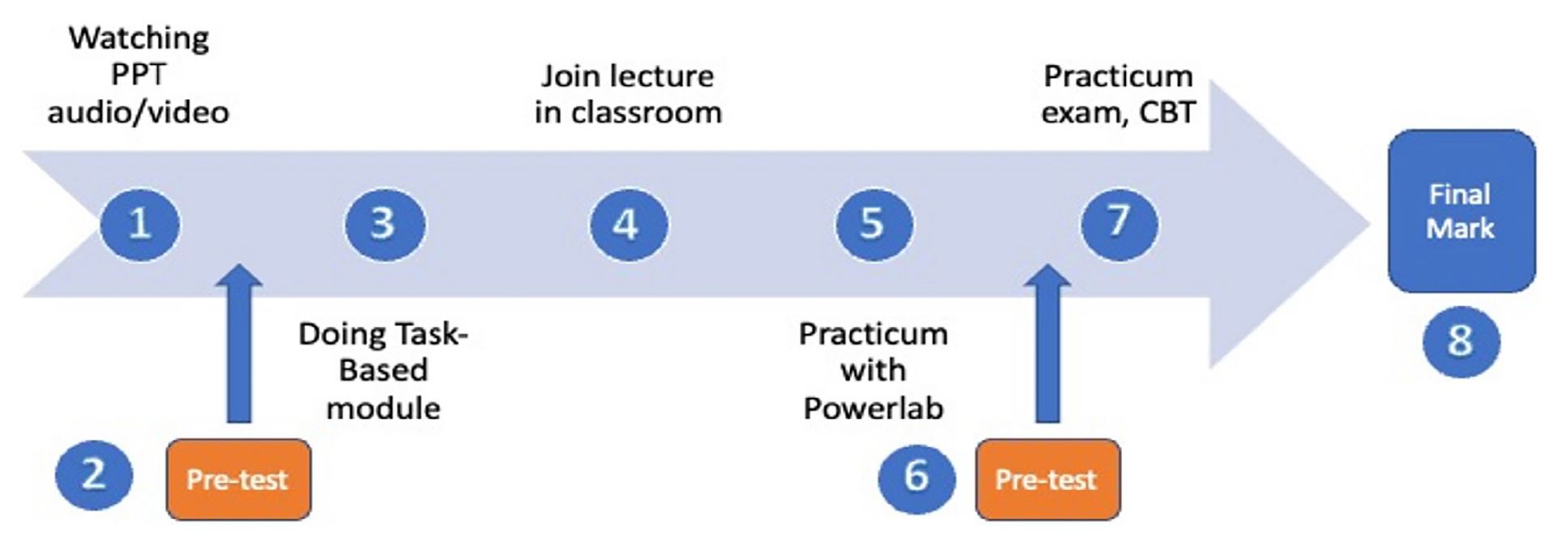
Figure 1. Flowchart of the instructional process integrating Task-Based Modules and PowerLab
Data sources/ measurement
The cognitive understanding of physiology was assessed through pre- and post-tests given to students before and after the intervention (task-based learning with PowerLab). These tests measured their knowledge of physiological concepts. The pre-test established a baseline; the post-test evaluated the students' understanding after exposure to the new teaching method. Students' practical performance in physiology experiments with PowerLab was assessed through practicum exam scores, which tested their abilities to conduct and interpret experiments using real-time data from the system.
The final marks in the biomedical course, including theoretical and practical components, were collected at the end. These marks assessed the overall student performance and determined if there was a significant association between the intervention (TBL and PowerLab) and final grades. At the end of the course, students completed a survey to express their views on PowerLab as a learning resource. The survey featured questions aiming at evaluating students' satisfaction, motivation, and the perceived influence on their learning journey. Responses were rated on a 4-point Likert scale, with choices from "Agree" to "Disagree".Engagement and imagination stimulation were measured through a survey asking students how PowerLab influenced their critical thinking, motivation, and creative engagement. Responses were collected on a Likert scale, rating their perceptions. Questions assessed how well PowerLab stimulated the students' imagination, critical thinking, and overall satisfaction with the learning process.
Sample size
We selected a sample of 180 undergraduate medical students based on a priori power analysis using G*Power software (effect size d=0.5, alpha=0.05, statistical power=80%) to ensure reliable results.
Statistical methods
Kolmogorov-Smirnov normality test indicated non-normal data distribution. The Wilcoxon signed-rank test determined median differences (reported as p<0.001). Spearman’s correlation (rho) assessed the relationships (effect size reported as correlation coefficients). Analyses were performed using SPSS version 26.0 (IBM Corp, USA).
Ethical consideration
The study was conducted in accordance with the principles outlined in the Declaration of Helsinki. The Health Medical Research Ethics Committee approved the study at the Faculty of Medicine and Health Sciences with the code of 495/UM/PKE/II.45/2022, University of Muhammadiyah Makassar (Makassar, Indonesia).
Results
Participants
A total of 180 students participated in this study. The respondents comprised 30 males (16.7%) and 150 females (83.3%).
Main results
Of the 180 students who participated in the study, comparing pre- and post-tests, scores improved in 148 students (82.2%), showed no improvement in 2 students (1.1%), and decreased in 30 students (16.7%). The pre-post-test scores elicited a statistically significant median increase compared to pre-test scores (p<0.001) (Table 1). However, the reasons behind the decreased scores for 30 students remain unclear and warrant further investigation. The average practicum exam score was 88.42±14.76, and the final mark for the course was 80.25±7.89.
| Variable | Mean±SD | Median (IQR) | p-value* |
|---|---|---|---|
| Pre test | 73.65±10.03 | 70.0 (10.0) | <0.001 |
| Post test | 78.73±10.97 | 81.2 (0.0) | |
| Practicum exam scores | 88.42±14.76 | ||
| Final Mark | 80.25±7.89 |
The perceptions of respondents using PowerLab for learning and conducting the experiments were obtained. Nearly half of the students agreed that PowerLab could help them understand the practicum (44%) and the concept of physiology (46%). In addition, 48% agreed that PowerLab was fun, and 47% agreed it stimulated imagination and critical thinking (Table 2). However, substantial proportions of neutral or disagree responses suggest mixed perceptions regarding its effectiveness.
| Variables | Responses | |||||
|---|---|---|---|---|---|---|
| Agreed | Neutral | Disagree | ||||
| Frequency | Percentage (%) | Frequency | Percentage (%) | Frequency | Percentage (%) | |
| PowerLab is able to help understand the practicum. | 80 | 44 | 66 | 37 | 34 | 19 |
| PowerLab is able to stimulate imagination and critical thinking skills. | 85 | 47 | 63 | 35 | 32 | 18 |
| PowerLab is easy and fun to use during practicum. | 87 | 48 | 63 | 35 | 30 | 17 |
| PowerLab helps in understanding concepts in physiology. | 82 | 46 | 65 | 36 | 33 | 18 |
Figure 2 presents the survey results related to students' satisfaction, motivation, and learning outcomes in their study of physiological concepts. The majority of students (67%) rated their satisfaction as "Excellent," followed by 25% "Good." Most students (64%) felt highly motivated, with 26% indicating "Good." A strong majority (69%) rated learning experiences "Excellent," with 31% selecting "Average." However, comprehension of PowerLab experiments showed greater variation, with 40% reporting only "Average" understanding, indicating discrepancies between the students' satisfaction and their perceived comprehension of the experimental concepts.
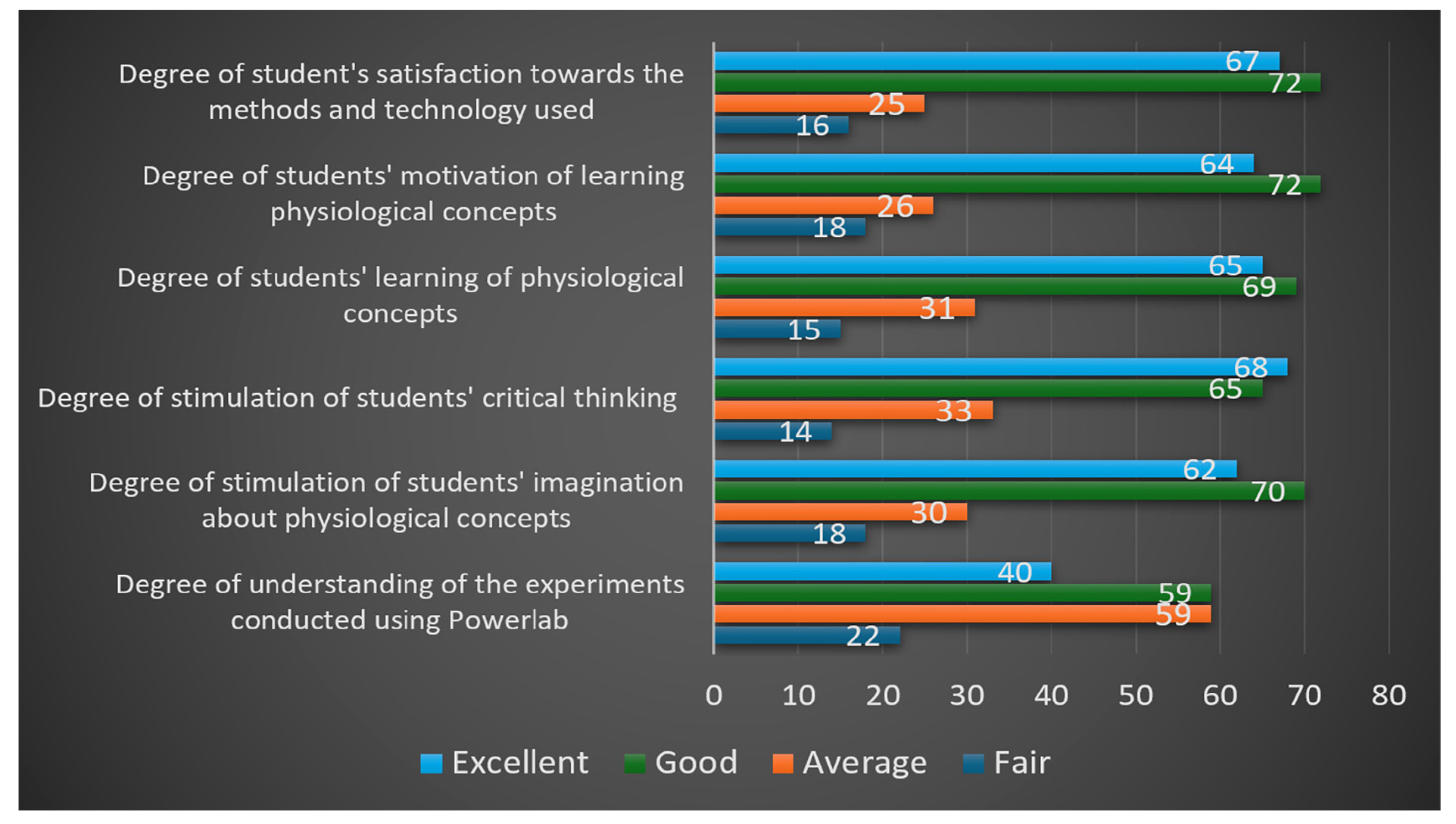
Figure 2. Engagement and Imagination Stimulation in Learning using PowerLab
Spearman’s rank-order correlation assessed relationships between practicum exam results, average test scores, and final marks. There were statistically significant correlations between practicum exam results (rho=0.82, p<0.001) and average test scores (rho=0.54, p<0.001) with final marks (Table 3).
| Variables | Final mark | |
|---|---|---|
| rho-value | p-value* | |
| Practicum exam score | 0.82 | <0.001 |
| Average test score (pre and post-test) | 0.54 | <0.001 |
Discussion
Combining task-based modules with cutting-edge simulation technologies, like the PowerLab system, offers a revolutionary method for teaching undergraduate physiology. The task-based learning (TBL) strategy actively involves students in realistic tasks that reflect clinical practice, promoting the connection of preclinical theory with practical applications. Research conducted by Shenoy, et al. (2022) demonstrates that TBL enhances interdisciplinary learning, boosts student motivation and satisfaction, and promotes a deeper conceptual understanding that is critical for transitioning from theoretical study to clinical competence ( 10 ). This interactive, learner-focused method inspires students to develop hypotheses, create experiments, and apply clinical reasoning, which enhances their problem-solving and critical thinking abilities.
The PowerLab system, while often discussed within the broader context of simulation-based learning, serves as an exemplary tool for bridging the gap between abstract physiological concepts and tangible experimental data. PowerLab’s ability to provide real-time data acquisition and analysis transforms traditional laboratory experiments into interactive, dynamic learning experiences. When incorporated into task-based modules, this technology reinforces theoretical knowledge by allowing students to observe, measure, and interpret physiological phenomena as they occur. Such an integration creates a safe, controlled learning environment—a benefit underscored by Nagarajappa and Kaur (2024), who note that simulation in medical education offers students the opportunity to rehearse critical skills and refine their techniques without real-life risk ( 9 ). This setting enhances technical competence and builds confidence and readiness for future clinical practice.
Moreover, the seamless combination of TBL and PowerLab fosters iterative learning processes through immediate, evidence-based feedback. As students adjust experimental parameters and witness the direct implications of their interventions, they engage in reflective practice that sharpens both cognitive and psychomotor abilities. This iterative cycle aligns well with contemporary pedagogical theories advocating for experiential learning and timely formative assessment. The enhancement in learning effectiveness not only leads to a deeper understanding of physiological processes but also fosters the growth of vital clinical skills. Nevertheless, variability in students’ outcomes, particularly the 16.7% who experienced decreased test scores, highlights that the effectiveness of this approach may differ among students, suggesting the need for further examination into factors such as learning styles and prior knowledge. In conclusion, recent studies endorse integrating task-oriented modules with the PowerLab system to elevate undergraduate physiology education, effectively converting theoretical concepts into practical, real-world applications. This teaching approach engages students in safe, simulation-driven experimentation, promoting a deeper conceptual grasp, enhancing the acquisition of practical skills, and ultimately equipping students to tackle the demands of contemporary clinical practice practice ( 9 , 10 ). These approaches emphasize the comprehension and application of knowledge through interactive and online assessments, which yield immediate and accurate feedback for learners ( 13 ). In disciplines such as physiology and pharmacology, digital tools have been successfully employed to deliver core biomedical concepts, aiming to enhance students' engagement and conceptual understanding ( 14 , 15 ).
In our study, a statistically significant improvement in students' post-test scores compared to their pre-test scores was observed (Table 1). This indicates that integrating task-oriented modules with PowerLab technology can significantly enhance the students' grasp of physiology concepts. Task-oriented modules provide organized learning pathways featuring well-defined goals and activities. Previous research has underscored their success in promoting student advancement via guided learning tasks and evaluations ( 16 ). During laboratory sessions, students interacted with PowerLab, a computer-based data. The acquisition system is integrated with instruments and analytical software. This configuration has allowed students to create and analyze physiological data through live graphing and interpretation. Most students felt that PowerLab positively impacted their understanding of laboratory exercises (44%) and physiology principles (46%) (Table 2). The user-friendly interface and low setup demands of this system encourage independent and self-directed learning. PowerLab provides practical experience by enabling students to gather, analyze, and print their own data, mimicking actual physiological research ( 17 ).
In addition, 48% of students indicated that they found PowerLab enjoyable, whereas 47% believed it stimulated their imagination and critical thinking (Table 2). Previous studies support the idea that computer-based systems such as PowerLab can foster creativity and analytical reasoning by allowing students to engage in authentic scientific exploration ( 7 , 17 ). In our findings, 88% of participants demonstrated good to excellent levels of imaginative engagement during experiments (Figure 2). This active learning environment encourages students to move beyond rote procedures and fosters deeper cognitive processing ( 5 ).
Our findings indicate that PowerLab not only improves the students' conceptual understanding but also boosts their motivation to learn physiology (Figure 2). By engaging students in data-driven, research-like experiences, this method helps cultivate important research skills. The literature also supports that undergraduate involvement in research activities enhances critical thinking, scientific curiosity, and academic performance ( 18 ).
Nonetheless, this study has limitations in terms of generalizability. The data were collected exclusively from first-year medical students at Universitas Muhammadiyah Makassar; therefore, the results may not reflect the experiences or outcomes of students from other institutions or academic levels. Integrating task-based learning with real-time data platforms using PowerLab fosters an inquiry-driven culture that connects foundational physiology to clinical reasoning early on. Medical faculty can utilize this approach to (i) emphasize hands-on experiments similar to patient-monitoring scenarios, (ii) develop critical thinking and data interpretation skills before rotations, and (iii) diversify assessments by merging cognitive tests with performance metrics.
Limitations
Convenience sampling specifically targeted the students who were willing and qualified to participate in the study. All students enrolled in the biomedical courses who had participated in 80% of the class activities were considered eligible. Out of 294 students enrolled in the biomedical courses, only 180 were eligible. Potential selection bias and lack of randomization are recognized limitations of this sampling approach, potentially limiting generalizability.
Conclusion
Integrating computer-based tools, like PowerLab, with task-based learning modules has shown a positive link to students’ academic success in Biomedical courses. This hybrid approach provides medical students with an interactive, hands-on learning experience that deepens their understanding of physiological concepts. By fostering early and engaging interaction with experimental data and real-world applications, these strategies enhance the development of critical thinking, scientific reasoning, and practical skills vital for future clinical practice. Subsequent research should investigate the scalability of this method across various institutions and academic levels to further confirm its effectiveness and broader applicability.
Acknowledgments
The authors would like to thank the Faculty of Medicine and Health Sciences Unismuh students for participating in this research. We also acknowledge the Faculty of Medicine and Health Sciences Universitas Muhammadiyah Makassar, for supporting this publication.
Authors’ contributions
All authors listed have contributed sufficiently to the research to be included as the authors. Conceptualization: AF, FM. Data curation: AF, MDI. Methodology/formal analysis/validation: AF, NM. Project administration: AF. Writing – original draft: AF. Writing – review & editing: AF, NM, FM, MDI. All authors have agreed to the submission, and the manuscript is not currently under submission in any other journal.
Conflict of interest
No potential conflict of interest relevant to this article was reported.
Declaration of AI
The authors declare that an AI-based grammar assistance tool (Grammarly) was used solely to improve the language, spelling, and grammar of this manuscript. No AI tools were used for generating, analyzing, or interpreting the data, nor for drawing the scientific conclusions presented in this article. The authors take full responsibility for the content of this work.
References
- Shenoy R, Jain A, Bhagyalakshmi K, Shirali A, Shetty SB, Anand R. A Task-Based Learning Strategy in Preclinical Medical Education. Ajp Advances in Physiology Education. 2022; 46(1):192-9.
- Gupta A, Singh XS, Khaliq F, Dhaliwal U, Madhu S V. Development and validation of simulated virtual patients to impart early clinical exposure in endocrine physiology. Adv Physiol Educ. 2018; 42(1):15-20.
- Tayade MC, Giri PA, Latti RG. Effectiveness of early clinical exposure in improving attitude and professional skills of medical students in current Indian medical education set up. J Family Med Prim Care. 2021; 10(2):681-5.
- Ellis J. The Methodology of Task-Based Teaching. Corruption, Social Sciences and the Law: Exploration across the disciplines. London: Routledge; 2019.
- Fitzpatrick KA. An investigative laboratory course in human physiology using computer technology and collaborative writing. Adv Physiol Educ. 2004; 28(1-4):112-9.
- Newland MC, Newland JR, Steele DJ, Lough DR, McCurdy FA. Computer-assisted learning for teaching anatomy and physiology in subjects allied to medicine. Med Teach. 2003; 25(2):207-9.
- Penhaker M, Kijonka J. Heidelberg: Springer Berlin Heidelberg; 2011.
- George S. Data Acquisition and Display for Electrophysiology: PC Oscilloscopes. Journal of Undergraduate Neuroscience Education. 2006; 5(1):R11.
- Nagarajappa A, Kaur S. Simulation in Contemporary Medical Education: Current Practices and the Way Forward. Indian J Anaesth. 2024; 68(1):17-23.
- Shenoy R, Jain A, Bhagyalakshmi K, Shirali A, Shetty SB, Anand R. A Task-Based Learning Strategy in Preclinical Medical Education. Ajp Advances in Physiology Education. 2022; 46(1):192-9.
- Oyeniran O, Chia T. PowerLab System Enhances Physiology Experimentation and Learning in Pre-Clinical Medical Students. Cumhuriyet Medical Journal. 2020; 42(3):351-8.
- Zhang J, Chen H, Wang X, Huang X, Xie D. Application of flipped classroom teaching method based on ADDIE concept in clinical teaching for neurology residents. BMC Med Educ. 2024; 24(1):366.
- Bouarab-Dahmani F, Tahi R. New Horizons on Education Inspired by Information and Communication Technologies. Procedia Soc Behav Sci. 2015; 174(1):602-8.
- Guze PA. Using Technology to Meet the Challenges of Medical Education. Trans Am Clin Climatol Assoc. 2015; 126:260.
- López-Pérez M V, Pérez-López MC, Rodríguez-Ariza L, Argente-Linares E. The influence of the use of technology on student outcomes in a blended learning context. Educational Technology Research and Development. 2013; 61(4):625-38.
- Mitchell I, Carbone A. A typology of task characteristics and their effects on student engagement. Int J Educ Res. 2011; 50(5):257-70.
- Aziz N, Simonetta G, Forrester K. Recent Developments in Data Recording Systems for Physiology. Pak J Physiol. 2006; 2(1):1-5.
- Randall DC, Wilbur FH, Burkholder TJ. Two models for an effective undergraduate research experience in physiology and other natural sciences. Adv Physiol Educ. 2004; 28(1–4):68-72.


